



Brexit: Economic stability versus immigration

We are five weeks away from the June 23 referendum on Brexit or not, and the polls put the Remain and Leave camps neck and neck.
Two key factors will determine the outcome of the referendum on June 23 about whether the UK remains in or leaves the EU.
One is the economic uncertainty that Leavers worry about if the UK were to exit the EU. They fear the prospect of penalties for UK based firms doing business on the continent.
The other is immigration, which the latest polls report 49% of respondents say will influence how they vote. The figure rises to 72% among Leavers.
Immigration is the single most important factor. It has been top of the agenda for a long time, but has only been picked up since the UK Independence Party made a breakthrough in the 2013 elections to the European Parliament. UKIP received more seats than Conservatives and Labour.
Nigel Farage, the charismatic leader of the UK Independence Party, had spotted a political opening. Immigration had for long been top of the British electorate’s concern. As a result of open door immigration policies by successive Labour governments between 1997 and 2010, the foreign born population in the UK had increased dramatically from 4.6 million to 7.5 million.
Eighty per cent came from outside Europe. The remainder came largely from eastern Europe, as the EU expanded eastwards. Then in 2010, southern Europe was precipitated in to deep recession. Immigration to the UK continued at pace.
The incident that best illustrated how far the metropolitan élites in London had moved from their traditional supporters came during the 2010 general election campaign when Gillian Duffy, a traditional Labour supporter, asked Prime Minister Gordon Brown about whether so much immigration was a good idea.
Brown mumbled a response, forgot to turn off his microphone, got into his limousine and blurted out that Duffy was a “bigot”. The media crowd heard him loud and clear.
Brown doubled back, eat a lot of humble pie, beat his breast in repentance, apologized profusely. But the die was cast. Duffy was now a household name, and has since become a regular on the British news circuit for her insights about what her people might be thinking.
Duffy was quoted as referring to eastern Europeans. But she may have not meant just them. She hails from Rochdale, in greater Manchester, where there is sizeable Muslim population.
Two years after the Brown-Duffy exchange, the Rochdale sex-trafficking case came to light, along with a number of others across the Midlands. A Rochdale gang of 4 Muslims were convicted of rape, trafficking girls for sex and conspiracy to engage in sexual activity with a child. Forty-seven girls were identified as victims, during the police investigation.
The girls were all white British, which led to a nation wide discussion of whether the crimes were racially motivated, and whether the failure to investigate them was linked to the authorities’ fear of being accused of racism.
Mrs Duffy likes going to the pub, and is quoted as saying “Labour needs a straight-talking pint drinking sort of man”. And she adds that Nigel Farage has the charisma to speak to working class people.
The Duffy story serves as a pointer to the June 23 referendum. First, the traditional northern England Labour vote is flaky. On balance, Labour voters favour Remain, but in northern England, they are attracted to Farage.
Second, Labour voters lean towards Remain for economic reasons: the UK is a much wealthier place in 2016 than it was in 1973 when it joined, it ranks no 6 out of 189 territories in the World Bank’s index of ease of doing business, and it serves as a manufacturing platform for multinationals selling into the European mainland.
Third, the UK electorate looks on the country as self governing. Competing claims by the Remain and Leave camps cancel each other out. Leavers say 70% of UK law hails from “Brussels”, Remainers say just about 7%.
That is where the immigration issue comes in. Farage knew what he was doing. Working class people in northern England were worried about cheap wage competition. As long as the UK was a member of the EU it was committed to the free movement of people.
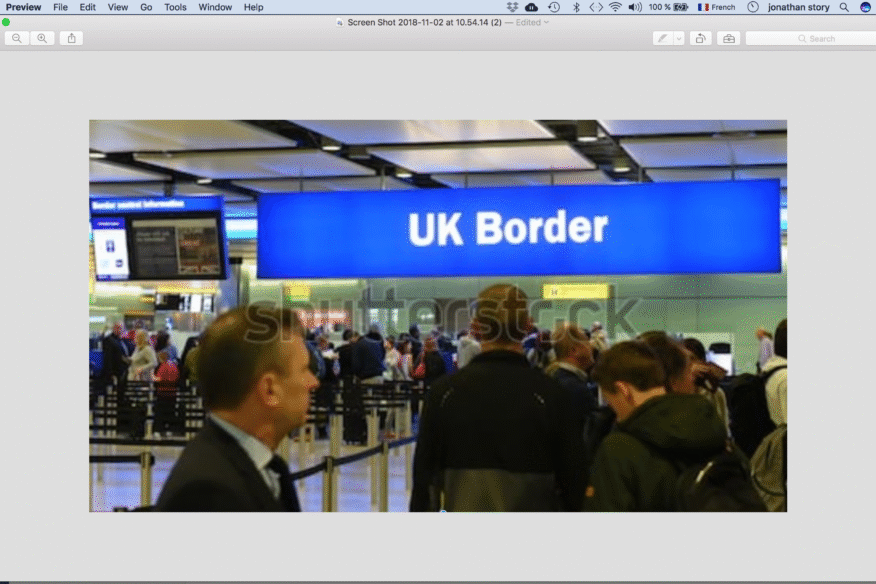
By making immigration central to the UKIP campaign, Farage brought home to a wide public that the UK no longer had control over its own borders.
He also turned the tables on whoever tried to paint him as racist by answering that by taking back control of its borders, the UK would be able to privilege skilled immigration from the subcontinent to unskilled immigration from eastern Europe.
In this, Farage is in broad agreement with the position now being defended by none other than Sir Trevor Philips, former chairman of the Commission for Racial Equality, whose parents came from Jamaica in the 1950s, and who has been an ardent champion of equal rights for immigrants.
Philips warns in a BBC Channel 4 programme, based on an ICM poll, “What British Muslims Really Think”, that British Islam is fast becoming a “nation within a nation”. His recommendation? Muslims who advocate death to apostates or stoning homosexuals should be told to leave the country forthwith.
Interpreted into policy, that means taking a tough line on Islamic radicalism, challenging human rights campaigners, and not interpreting international treaties as supranational sources of law.
But the contenders will not make Islamic radicalism an issue in the EU referendum. On the other hand, the lack of UK control over its borders is not an issue that will go away.
On balance, the polls show that economic stability trumps immigration as a concern for voters. The edge lies with Remain. Immigration is unlikely to win the Leave camp a majority on June 23.